+86 (0)574 62837603


In the harsh working conditions of the chemical, pharmaceutical, food processing and semiconductor industries, it is crucial to find a sealing solution that can withstand highly corrosive media while maintaining long-term sealing reliability.
Traditional elastomer O-rings often fail when exposed to strong acids, solvents, aggressive cleaning agents or high-purity process media.
Encapsulated O-rings were developed to solve this problem.
An encapsulated O-ring is a composite sealing product that cleverly combines the advantages of an “elastic inner core” and a “fluoropolymer outer jacket”.
The elastomer core provides resilience and recovery force, while the fluoropolymer jacket directly contacts the process media and provides exceptional chemical resistance.
This “rigid-flexible” design allows the seal to possess both the elasticity of rubber and the chemical inertness of fluoroplastics.
Depending on different operating conditions, the encapsulation material is mainly divided into two types:
SUNPASS offer these two types encapsulated O-ring both
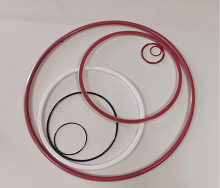
Although these two products appear almost identical, their performance under temperature, steam and thermal cycling conditions can differ significantly.
Understanding these differences is a prerequisite for selecting the appropriate sealing solution.
FEP and PFA encapsulated O-rings share the same basic structure.
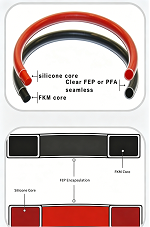
SUNPASS O-rings structure
The inner core is typically manufactured from:
Its primary function is to provide elastic recovery and maintain sealing force during operation.
The outer jacket is manufactured from either FEP or PFA fluoropolymer materials.
This layer directly contacts the process media and provides:
This unique structure combines the advantages of PTFE with the flexibility of conventional elastomers.
FEP (Fluorinated Ethylene Propylene) is currently the most widely used encapsulation material for encapsulated O-rings.
Due to its excellent chemical resistance and relatively economical manufacturing cost, FEP has become the standard solution for most industrial sealing applications.
Typical advantages include:
① Excellent resistance to acids, alkalis and solvents.
② Extremely low surface energy and excellent non-stick properties.
③ FDA-compliant grades are available for food and pharmaceutical applications.
④ Smooth surfaces help reduce installation friction and media residue.
⑤ Broad availability and shorter production lead times.
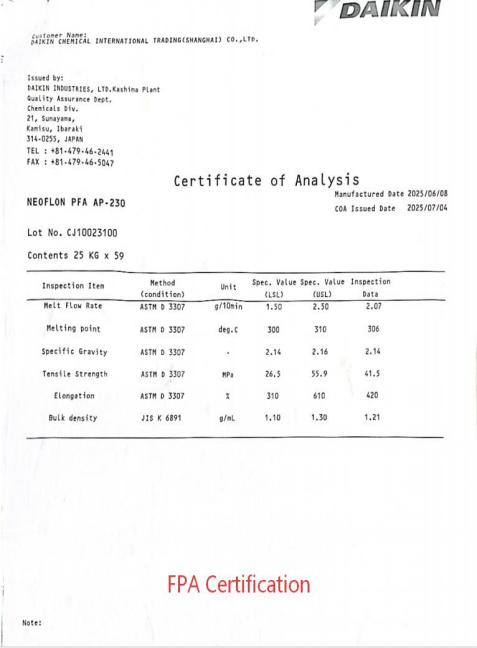
SUNPASS sealing FEP Encapsulation offers FDA Certification and high performance test certification of FEP encapsulated O-rings
Typical applications include:
For operating temperatures below 200°C, FEP encapsulated O-rings can meet the requirements of most industrial applications.
PFA (Perfluoroalkoxy) belongs to the same fluoropolymer family as FEP but provides improved thermal stability and mechanical performance.
Compared with FEP, PFA offers:
① Higher continuous operating temperatures.
② Better resistance to thermal cycling.
③ Improved crack resistance under repeated stress conditions.
④ Superior performance in steam and sterilization environments.
⑤ Longer service life under demanding operating conditions.
For this reason, PFA encapsulated O-rings are commonly specified in:
Although the initial purchase cost is higher, PFA often provides greater reliability under severe operating conditions.
|
Property |
FEP Encapsulation |
PFA Encapsulation |
|
Chemical Resistance |
Excellent |
Excellent |
|
Continuous Service Temperature |
-200°C to 200°C |
-200°C to 260°C |
|
Steam Resistance |
Excellent |
Excellent |
|
Thermal Cycling Resistance |
Excellent |
Excellent |
|
Flex Life |
Excellent |
Excellent |
|
FDA Compliance |
Available |
Available |
|
Relative Cost |
Lower |
Higher |
For most applications, the primary selection factor is not chemical compatibility.
The key consideration is whether the sealing system will be exposed to elevated temperatures, steam sterilization cycles or repeated thermal shock conditions.
For many industrial users, FEP remains the ideal solution because it offers:
For chemical processing, tank containers and general industrial applications, FEP is usually the preferred choice.
When operating conditions involve:
PFA becomes the more suitable solution.
Selecting the correct encapsulation material can significantly improve sealing reliability and reduce maintenance frequency throughout the equipment lifecycle.
Why choose us?
SUNPASS SEALING TECH, founded in 1979, has 178 employees. Relying on more than 40 years of mature technology and experience, it specializes in the production of industrial sealing and thermal insulation materials. SUNPASS has a high reputation and influence in the sealing industry at home and abroad.
SUNPASS has a modern professional workshop of 12000M2, with more than 20 production lines such as graphite products, PTFE products, sealing gland packing, sealing gasket, glass fiber products, ceramic fiber products, rubber products and so on.
Customers are located in more than 200 countries and regions such as China, Kuwait, Spain, Germany, France, the Netherlands, Saudi Arabia, Russia, the United States, Mexico, Brazil, Australia, South Korea, Japan, Thailand, Egypt, Belgium, etc.
SUNPASS use only food-grade FEP/PFA fluoropolymer materials and internationally recognized elastomer cores, including food-grade silicone and high-performance FKM compounds.
Compared with conventional encapsulated O-rings available on the market, our products feature better resilience, improved compression recovery and superior resistance to aging.
Benefiting from the excellent temperature resistance of FEP/PFA and the optimized rubber core formulation, our encapsulated O-rings maintain flexibility and sealing performance under both low-temperature and high-temperature operating conditions.
Under low-temperature conditions, ordinary rubber O-rings tend to become hard and lose elasticity, resulting in sealing failure. In contrast, our encapsulated O-rings continue to maintain reliable sealing performance in extreme environments.
The products are suitable for a wide operating temperature range and are widely used in chemical processing, food production, pharmaceutical equipment and high-purity industries.
To ensure consistent product quality, strict quality control points are established throughout the entire manufacturing process.
Compared with ordinary encapsulated O-rings, our products feature highly transparent FEP jackets, less visible seams, improved core elasticity and superior sealing performance.
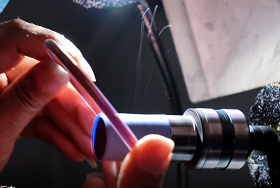
The dense encapsulation structure effectively blocks the penetration paths of gases, liquids and contaminants, forming a reliable sealing barrier for demanding industrial applications.
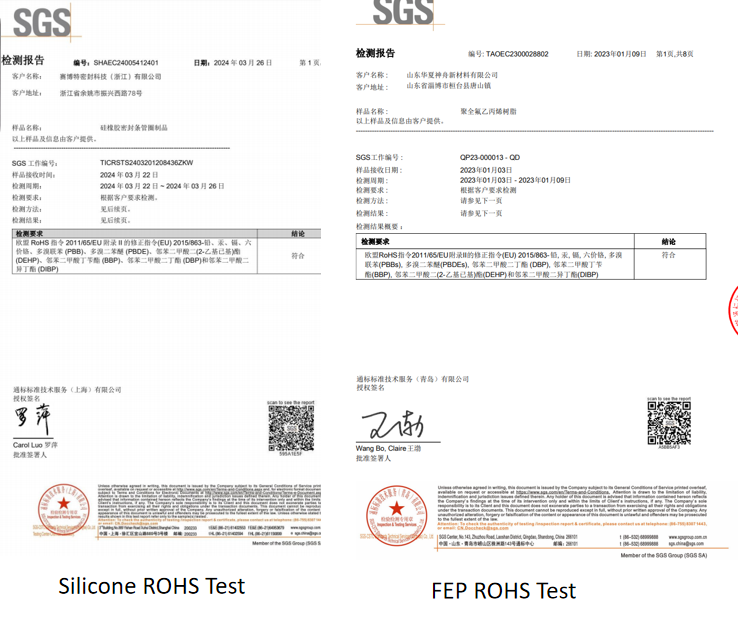
Our encapsulated O-rings have passed multiple performance verification tests, including:
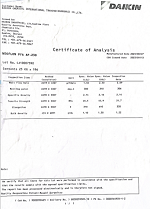
FDA of FEP Certification
Thanks to improved material selection and manufacturing technology, the average service life of our encapsulated O-rings is typically 30%-50% longer than standard products available on the market.
The longer service life significantly reduces replacement frequency, maintenance shutdowns and spare part inventory costs.
Excellent elasticity and aging resistance further reduce maintenance requirements and leakage-related labor costs.
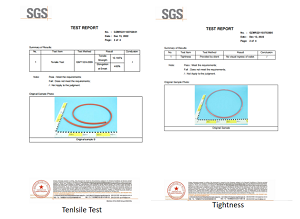
More importantly, reliable sealing performance helps customers avoid cargo loss, environmental penalties and potential safety incidents caused by leakage failures — costs that often far exceed the price of the sealing component itself.
We provide comprehensive pre-sales and after-sales support to help customers select the most suitable sealing solution for their applications.
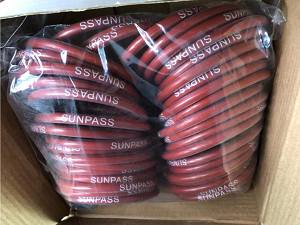
Based on the customer's media, temperature, pressure and installation conditions, our engineering team can recommend the optimal combination of encapsulation material and elastomer core to achieve the best balance between sealing reliability, service life and cost performance.
Sunpass Sealing Technology (Zhejiang) Co. LTD
• Zhejiang Top Sealing and Insulation Co.,Ltd.
• Echo Industry Limited
• Tenglong Sealing and Thermal Insulation Manufactory
 English
 русский
 Español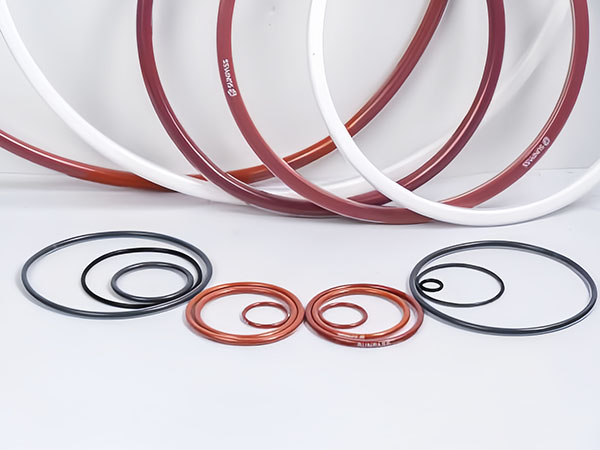
 Add: No. 78 West Road Zhenxing, Lianghui Industry Zone, Yuyao, Zhejiang, China
 Tel: +86 574 62837603
 E-mail: