+86 (0)574 62837603


Semiconductor wet-process equipment subjects seals to acids, bases, oxidizers, solvents and ultrapure water. When standard elastomer O-rings lack adequate chemical resistance, FEP encapsulated O-rings are a viable option.
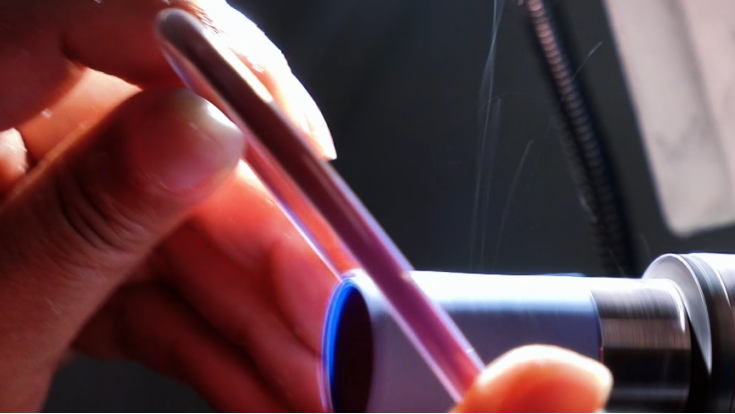
This seal design pairs a seamless FEP fluoropolymer jacket with an elastomer core: the FEP shell delivers chemical resistance, and the inner elastomer provides resilient sealing force. It integrates chemical compatibility, elastomer-level sealing performance and low-friction surface properties.
However, selecting an FEP encapsulated O-ring for semiconductor equipment requires more than checking the material name. Chemical concentration, temperature, pressure, core material, compression, groove geometry, and cleanliness requirements should be evaluated together.
Start with the process chemistry, rather than a general statement such as "acid resistant."
Semiconductor wet benches can use RCA cleaning chemistries, dilute HF, and other chemical formulations. For example, one Stanford nanofabrication process uses SC-1 at a 5:1:1 ratio of water:H₂O₂:NH₄OH, followed by SC-2 at 5:1:1 water:H₂O₂:HCl, with 50:1 HF used for oxide etching.
These examples illustrate why chemical compatibility should be evaluated using the actual chemical, concentration, temperature, and exposure time, rather than simply classifying a medium as an acid, base, or solvent.
FEP has broad chemical resistance. Chemours lists "Excellent" chemical resistance for Teflon™ FEP 100 and a continuous service temperature of 205°C for the resin.
The FEP jacket should therefore be treated as a chemical barrier—not as an assumption that the elastomer core can never be affected. Trelleborg notes that corrosive substances can eventually permeate FEP encapsulation and affect the core, with permeation influenced by temperature, pressure, contact area, and jacket thickness.
For procurement, verify:
The temperature rating of the FEP jacket cannot represent the overall operating limit of a complete encapsulated O-ring. The elastomer core, process media, pressure and service conditions all play key roles.
For reference, Trelleborg specifies FEP-VMQ from −60°C to 205°C and FEP-FKM from −20°C to 205°C, yet these lab-derived ranges drop for continuous service when media and pressure are involved. As real-world continuous static ratings, SUNPASS FEP encapsulated O-rings perform from −60°C to 150°C under combined media-pressure conditions.
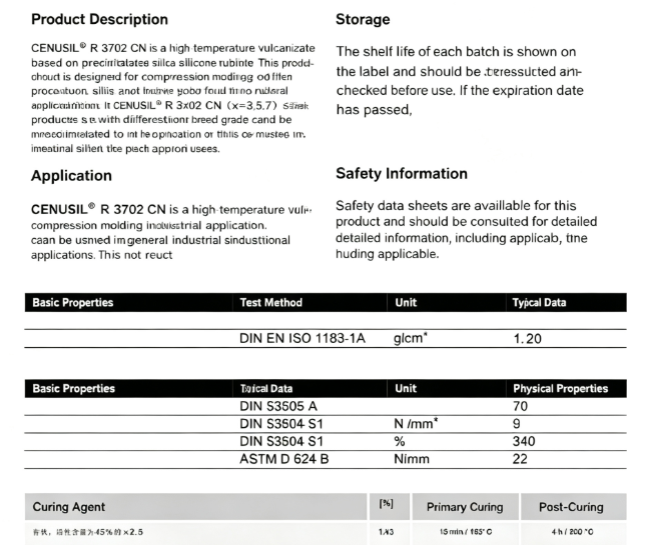
SUNPASS currently specifies its FEP encapsulated O-rings with a silicone (VMQ) elastomer core and provides product-level performance data including 14 MPa tensile strength, 29 MPa compression strength, and 380% elongation.
Temperature cycling is also important in wet processing.The selection should therefore consider the complete thermal cycle rather than a single maximum temperature.
Pressure and installation conditions matter as well. SUNPASS provides dedicated groove-design guidance and warns that the limited stretch of encapsulated O-rings should be considered during installation.
The elastomer core provides the elastic sealing force, while the FEP jacket provides the external chemical-resistant surface.
Commercial FEP encapsulated O-rings are available with different core constructions. Trelleborg lists typical hardness values of approximately 85–90 Shore A for solid silicone cores and 90–95 Shore A for solid FKM cores.
This difference matters because the core influences the mechanical behavior of the finished seal.
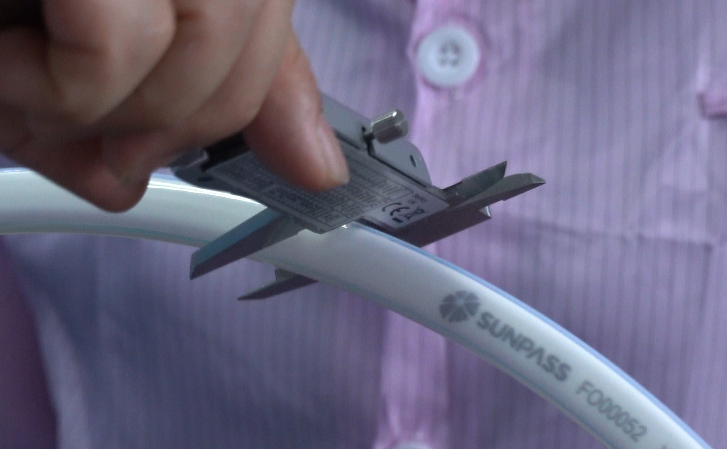
Size and installation should also be specified precisely. Instead of ordering simply by "FEP O-ring," provide the supplier with:
For semiconductor equipment, the correct dimensional fit is particularly important because an unsuitable groove or excessive installation stretch can compromise sealing performance.
Before placing an order, semiconductor equipment buyers should confirm the following:
|
Category |
Required Parameters |
|
Chemical compatibility |
Chemical name Concentration Temperature Exposure time |
|
Operating conditions |
Minimum and maximum temperature Thermal cycling Normal pressure and pressure excursions Application type: static seal only (not intended for dynamic service) |
|
Seal construction |
FEP jacket Core material O-ring ID and cross-section Required hardness or mechanical properties |
|
Installation |
Groove dimensions Required compression/squeeze Sealing direction Installation method |
|
Cleanliness |
Cleaning method Packaging requirements Traceability Available contamination or material test data |
This approach is consistent with the purpose of SEMI F51-0917, Guide for Elastomeric Sealing Technology, which provides guidance for selecting and evaluating seals used in semiconductor fabrication equipment, including material properties, seal cleanliness, packaging, and handling.
SEMI is also currently revising F51. Its 2026 revision work identifies chemical compatibility, compression set, thermal cycling, leachables/extractables, metallic contamination, TOC, outgassing, particle generation, dimensional fit, installation sensitivity, packaging cleanliness, and material traceability as areas for industry input.
Choosing SUNPASS FEP encapsulated O-rings goes beyond picking a basic chemical-resistant fluoropolymer. Performance depends on process chemistry, temperature, pressure, core material, groove geometry and cleanliness—evaluated together.
Our encapsulated O-rings deliver 30–50% longer service life than standard alternatives, cutting replacement cycles and downtime. Superior resilience and anti-aging properties reduce maintenance and leak-related risks, protecting against cargo loss and safety incidents.
Manufactured under clean-room protocols: operators pass air-shower, static-elimination and clean-garment procedures. Seamless FEP jackets with premium VMQ silicone or FKM cores offer high elongation, high-temperature resistance and reliable sealing; high-temp and sealing test reports available on request.
Unlike ordinary rubber O-rings that harden in the cold, ours stay flexible down to-60°C. The smooth PTFE surface resists residue and water cling for easy drying, and performs stably through rapid thermal cycling—from >100°C steam cleaning to-60°C cold-chain transport.
Note: designed for static sealing applications .
We offer one-year warranty, stocked standard sizes, urgent-order priority, free selection support, free samples and OEM service. Share your media, temperature, pressure and dimensions—we’ll recommend the best configuration.
Contact SUNPASS for your semiconductor wet-process sealing evaluation.
Sunpass Sealing Technology (Zhejiang) Co. LTD
• Zhejiang Top Sealing and Insulation Co.,Ltd.
• Echo Industry Limited
• Tenglong Sealing and Thermal Insulation Manufactory
 English
 русский
 Español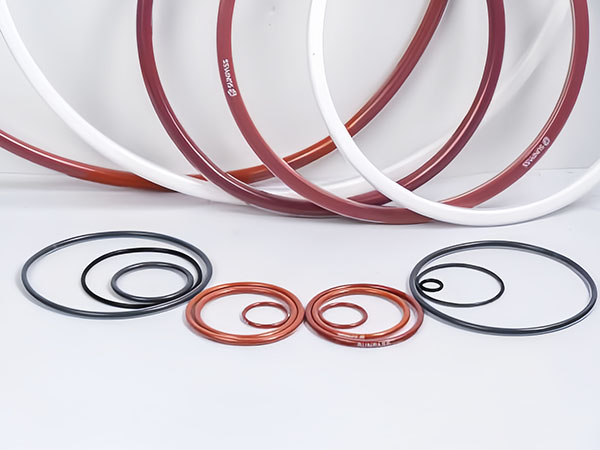
 Add: No. 78 West Road Zhenxing, Lianghui Industry Zone, Yuyao, Zhejiang, China
 Tel: +86 574 62837603
 E-mail: