+86 (0)574 62837603



Most insulation decisions are made on maintenance frequency. The number that decides the specification is removal events per remaining life — and on a great many joints the answer is zero.
Removable covers pay off only on joints that are physically opened. Decide with removal events per remaining life against a break-even number — not with maintenance frequency, and not with a category-wide conversion programme.
Picture a typical steam header: 80 flanged joints and 30 valves. No one budgeted for insulation maintenance, because insulation is a capital item. Yet every time a flange is opened, somebody cuts the cladding, pulls the mineral wool, does the work, and rebuilds the insulation — and that labour lands on the maintenance budget, spread across dozens of work orders, invisible as a line item.
The question is not “is removable better than fixed.” It is “for this specific joint, does the maintenance task require removing the insulation at all — and if so, how many times over the remaining life?”
Insulation is specified against steady-state heat loss: a surface-temperature target, an ambient condition, a material with a conductivity, a thickness. That calculation has no input for “this joint will be opened six times in the next decade.”
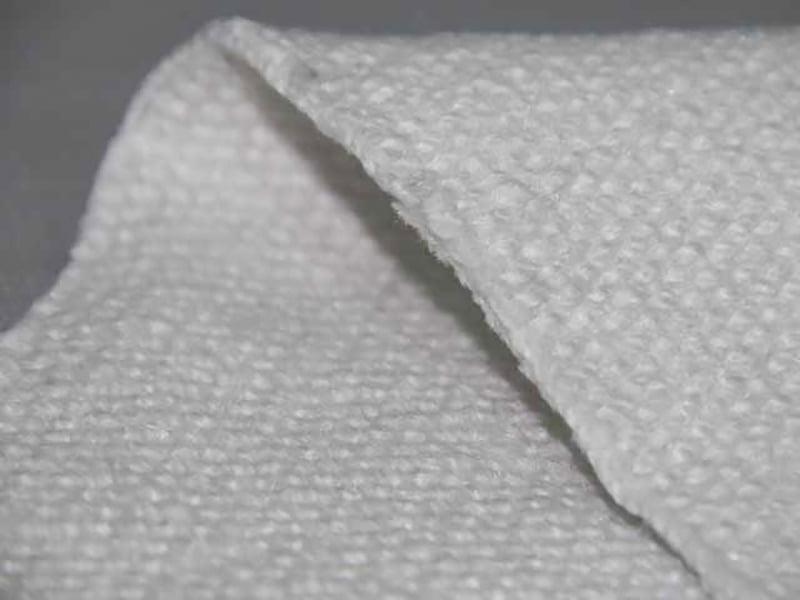
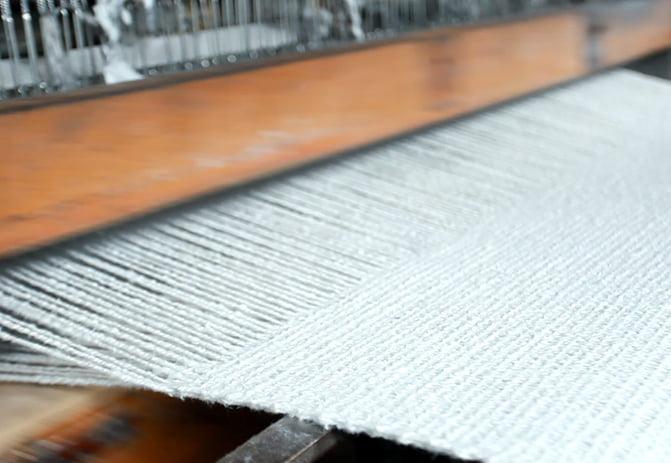
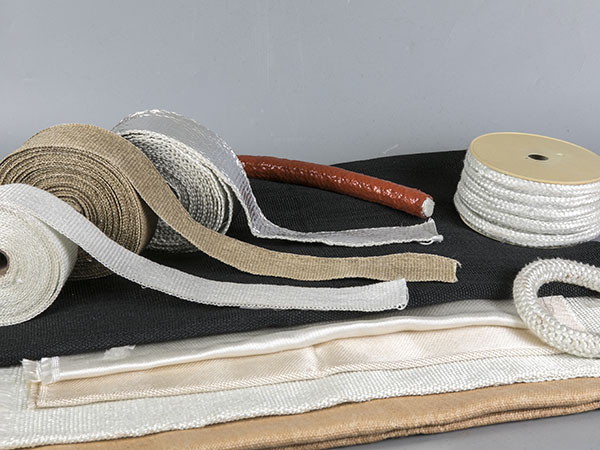
The material side is well understood. SUNPASS’s thermal insulation range covers fiberglass at 450–550 °C, ceramic fibre at 850–1260 °C, basalt up to 700 °C and silica up to 1800 °C, supplied as cloth, tape, rope and sleeve. The materials are not the hard part of the problem. The hard part is that a fixed installation is built to stay put, and maintenance is the one activity that requires it not to.
Product range referenced in this guide: Thermal Insulations.
There is also a real safety function that should not be lost in the argument: an uninsulated 200 °C flange is both a burn hazard and a heat-loss source. The choice is not “insulate or don’t.” It is “which enclosure survives being opened.”
This is where most insulation decisions go wrong, because they use maintenance frequency as the proxy. Frequency is the wrong metric. The right one is removal events per year — how many times per year the task physically requires the insulation to come off.
Table 1 — Task type versus removal requirement, and what a removable cover buys in each case
| Task type | Requires removal? | What a removable cover actually buys |
|---|---|---|
| Operating a valve (open/close, actuator stroke) | No | Nothing. A jacket adds a step, not access |
| Visual leak check at a flange | Partly — an inspection port may be enough | Faster periodic inspection without full removal |
| Packing-gland adjustment on a valve | Often a port, not full removal | Gland access without disturbing the body cover |
| Gasket replacement / joint disassembly | Yes, full removal | The main case: minutes instead of hours |
| Strainer cleaning | Yes, usually | Repeated access with no consumable insulation |
| Thermowell or instrument connection | Usually a local opening | A designed port beats a cut |
A valve stroked daily but opened annually gains almost nothing from a removable cover. A flange that is never disassembled but inspected twice a year gains a lot from a cover with an inspection port. The distinction between operating equipment and opening it is the whole argument.
Insulation cost is usually overstated in one direction and understated in another. Build the comparison from five buckets, and be strict about attribution:
Table 2 — The five cost buckets to build the comparison from, and how to attribute each
| Cost bucket | What belongs in it | Attribution rule |
|---|---|---|
| Removal | Labour, plus the cladding and insulation a fixed system destroys | A reusable cover consumes labour but not material |
| Reinstatement | Labour to rebuild, seal and inspect | On fixed systems this is often longer than the removal |
| Incremental delay | Only the part where the insulation step sits on the critical path | If the cover can come off while scaffolding is being erected, its delay cost is close to zero |
| Inspection access | The value of being able to look at the joint | Risk reduction, not a hard saving — state it as such |
| Cover lifecycle | Inspection, fastener replacement, fabric wear, eventual replacement | Count it over the same remaining life as option F |
Attributing a whole shift of downtime to insulation is usually wrong. The honest asymmetry: fixed insulation has a low first cost and a high cost per access; a removable cover has a high first cost and a low cost per access. Everything else is detail.
The comparison that matters is not a four-term sum. It is the number of accesses at which the two options break even:
N* = ( Cinit,R − Cinit,F ) / ( Caccess,F − Caccess,R )
Formula 1 — break-even number of accesses. Cinit is material plus first installation; Caccess is the cost of one removal-and-reinstatement cycle.
Worked example — illustrative figures only, not measured savings from a SUNPASS project. Replace every number with your own. DN150 flange, 180 °C steam, indoors:
Table 3 — Illustration of the two cost profiles used in the break-even calculation (currency units are arbitrary)
| Option | First cost (material + install) | Cost per access | Basis |
|---|---|---|---|
| Fixed insulation | 300 | 290 | 4.0 h at 60/h plus 50 in consumables, destroyed each time |
| Removable cover | 1,200 | 9 | 0.15 h at 60/h, no consumable insulation |
N* = (1200 − 300) / (290 − 9) = 900 / 281 ≈ 3.2
The cover pays back at roughly the fourth access.
Opened twice in its remaining life, fixed wins on labour alone; opened six times, removable wins clearly. The number is not a claim about your plant — it is the arithmetic you should run with your own rates and your own work-order history.
The reverse decision matters as much as the forward one, and it is usually missing from supplier literature.
Table 4 — Conditions under which a removable cover is the wrong specification
| Condition | Why a removable cover loses | Better answer |
|---|---|---|
| No clearance to remove it | A cover that cannot be lifted off in the available space is a fixed cover with extra steps | Fixed clad system, or a cover designed around the actual access route |
| The task does not require removal | The most common wasted purchase | Fixed insulation; spend the difference on inspection ports |
| Mechanical abuse | Weld spatter, heavy foot traffic and impact destroy fabric covers | Fire blanket for hot work, clad fixed system for permanent protection |
| Temperature beyond the whole assembly, not just the core | Core, fabric, thread and fastener — the lowest-rated component sets the limit | Specify each component; the fastener is usually the lowest |
| Long straight runs, buried lines, welded joints | No access need, no benefit | Fixed insulation |
| Cold service | Below ambient the failure mode changes from heat loss to vapour drive and ice formation; a loose cover can make moisture ingress worse | Vapour-tight construction and a sealed fit matter more than removability |
| Chemical splash zones | Check the fabric, not just the insulation | Silicone-coated fiberglass rope has its own chemical limits — verify them |
A removable cover improves access. It does not remove the corrosion-under-insulation mechanism. Moisture can still enter a poorly fitted cover, and on cold service the vapour drive can leave the inside wetter than an open surface would be. The cover changes how often you can inspect and how easily you can dry the joint; it does not replace coating condition, drainage and a sealed fit. Present it as an inspection enabler, not a corrosion solution.
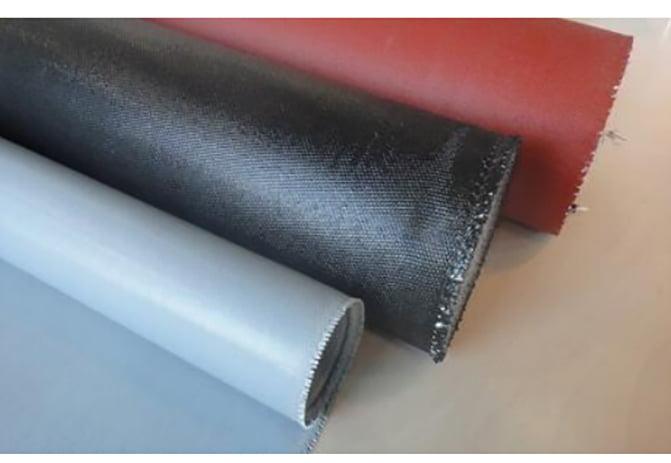
SUNPASS’s published range is material-level, and the offer is insulation material plus custom fabrication — not a standard catalogue of finished jackets.
Table 5 — SUNPASS material range and the role each material plays in a removable cover
| Material | Published temperature range | Typical forms | Role in a cover |
|---|---|---|---|
| Fiberglass | 450–550 °C | Cloth, tape, rope, sleeve | General steam and hot-water service, economical |
| Ceramic fibre | 850–1260 °C | Cloth, tape, rope, sleeve, blanket | Furnace-adjacent and high-temperature joints |
| Basalt | Up to 700 °C | Tape, texturized fabric | Exhaust and abrasion-prone wraps |
| Silica | Up to 1800 °C | Cloth, tape, rope, sleeve | Highest-temperature enclosures |
| Silicone-coated fiberglass | Fabric-limited, see supplier data | Cloth, square rope | Valve stems, flanges and reactor joints in splash zones |
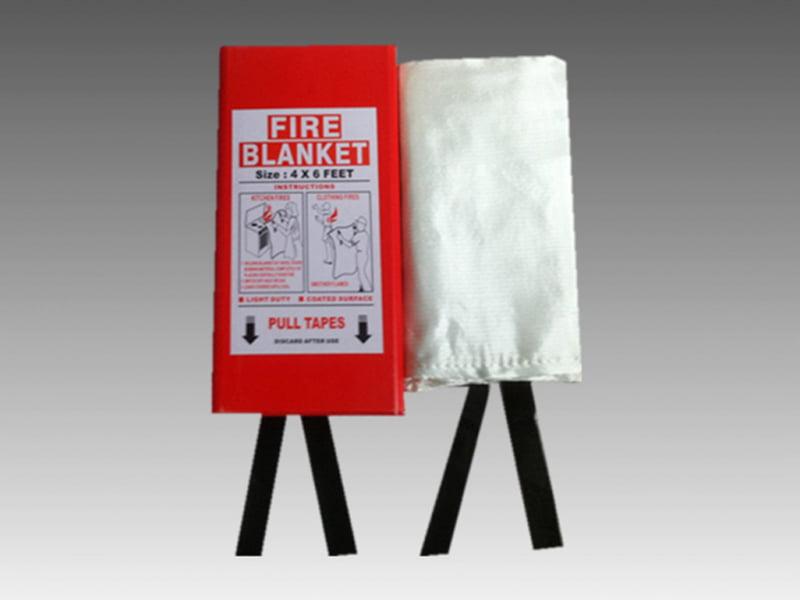
| Fire blanket | Hot-work protection | Boxed blanket | Weld spatter shielding where covers would be destroyed |
Before ordering, confirm five things: which material suits your surface temperature and chemistry; the fabricated form and dimensions; the outer fabric options; the fastener type and its own temperature limit; and whether your geometry needs a single panel or a multi-panel assembly with a port.
Six items decide whether a cover survives repeated removal:
SUNPASS supplies the insulation materials that set most of these limits, plus custom fabrication to your dimensions. Its product documentation describes these cloths and tapes as “soft and bendable, freely wrapping irregular pipelines, curved equipment and valve parts,” which is the property that makes a fabric-based cover viable on a valve at all; the geometry, not the material, is still where most covers fail.
Material reference: Thermal Insulations — cloth, tape, rope, sleeve and fire blanket.
The useful deliverable is a table with one row per asset and six columns. Multiply removal events by remaining life, compare with N*, and sort. The assets above the line are the ones worth quoting. That is a defensible capital plan; a blanket “convert all valves” programme is not.
Table 6 — Asset-level worksheet template (one row per joint; sort by removal events × remaining life against N*)
| Asset / tag | Task type | Removal events per year | Sequential or parallel | Access time: fixed vs removable | Remaining life (yrs) |
|---|---|---|---|---|---|
They can, but the energy case depends on thickness and fit, not on removability. Ask for the assembly’s thermal performance and compare at equal surface temperature. The stronger case for removable covers is access, and it is usually the case that pays.
That is a property of the specific fabric, thread and fastener, not of the category. Ask the supplier for a cycle count for the assembly you are buying, and inspect fasteners at every removal.
You can, and many plants do. It works until the cut edges are not sealed, moisture enters, and the window becomes a corrosion site. A designed port with a re-sealable closure is the version that survives.
Yes — a valve that is never opened, in a location with no inspection requirement, is a straight-run problem in a different shape. The decision is about access, not about the component type.
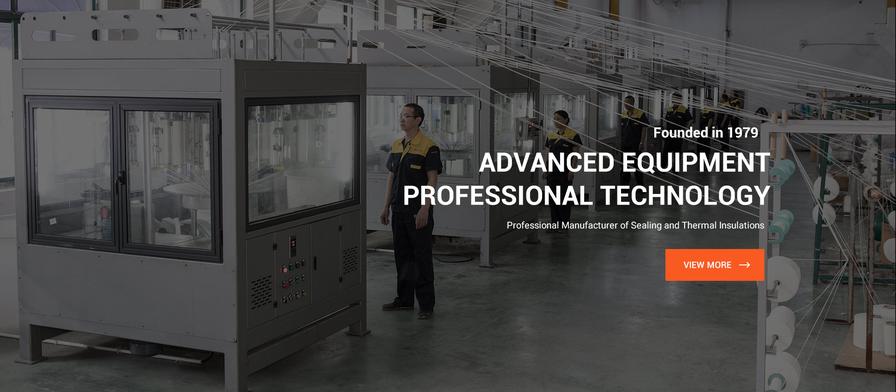
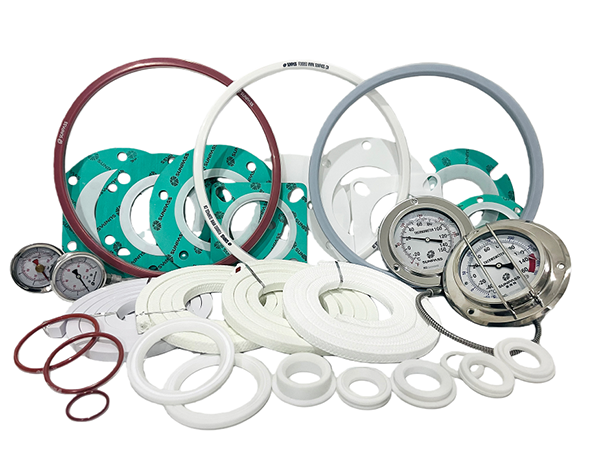
SUNPASS Sealing Technology (Zhejiang) Co., Ltd. and its subsidiaries — Zhejiang Top Sealing and Insulation Co., Ltd., Echo Industry Limited and Tenglong Sealing and Thermal Insulation Manufactory — have manufactured sealing and thermal insulation products since 1979. The published range covers gland packing, gaskets and sheets, PTFE products, ISO tank container accessories, and the thermal insulation cloths, tapes, ropes, sleeves and blankets referenced in this guide.
Product information and enquiries: www.sunpasssealing.com — thermal insulation cloth, tape, rope, sleeve and fire blanket.
Sunpass Sealing Technology (Zhejiang) Co. LTD
• Zhejiang Top Sealing and Insulation Co.,Ltd.
• Echo Industry Limited
• Tenglong Sealing and Thermal Insulation Manufactory
 English
 русский
 Español
 Add: No. 78 West Road Zhenxing, Lianghui Industry Zone, Yuyao, Zhejiang, China
 Tel: +86 574 62837603
 E-mail: