+86 (0)574 62837603



Gland packing extrusion in high-pressure valves is not always caused by insufficient packing strength. Excessive clearance, stuffing box geometry, pressure loading and installation conditions often contribute to the failure. Replacing the packing with a harder grade may not solve the problem if the original mechanical cause remains. This guide explains the mechanism, the measurements that matter, and the information needed to select a replacement.
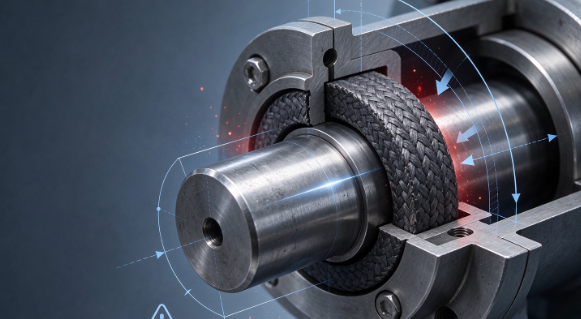
A valve runs for months, then the packing extrudes from the stuffing box clearance or loses its seated position. Maintenance teams may conclude that the packing was too soft and fit a harder grade. That response addresses one variable and ignores four others.
Three field patterns are common: packing pushed into the stem-to-box clearance, displacement at the gland follower, and extrusion after a pressure or temperature change. The visible result is similar; the contributing geometry is not. A harder packing can resist deformation, but it cannot close an oversized clearance or correct an eccentric stem.
Extrusion occurs when packing material is pushed into or through a gap under pressure. The risk depends on five conditions: pressure, clearance size and shape, stuffing box geometry, packing material and construction, and installation state.
The practical sequence is to locate the extrusion, measure the relevant gap, review pressure and cycling history, and only then decide whether the grade should change. Replacing material before confirming the gap treats the symptom, not the cause.
3.1 Excessive Clearance and Stuffing Box Geometry
Clearance is the most direct route to extrusion, but it is not a single measurement. Packing practice distinguishes stem-to-box, follower-to-stem and follower-to-box clearances; packing-to-bore fit is a fourth condition set by the packing section and box bore.
Published values reflect different measurement locations. One source may define the gap between stem and box; another may specify follower-to-stem or follower-to-box. These values are not interchangeable. Measure the relevant gap at the actual stuffing box and compare it with the valve manufacturer's installation specification.
A worn stem, off-centre box or binding follower can create a local gap larger than the nominal clearance, so check around the circumference and along the stack.
3.2 High Operating Pressure
Pressure supplies the driving force. A packing's catalogue pressure rating describes a material or construction under defined test conditions, not a valve qualification. A graphite packing listed at 500 bar can still extrude at lower pressure if clearance is excessive or gland load is uneven.
The relevant pressure is the stuffing box pressure, including fluctuations, not the nominal plant header rating. Record normal and upset pressure before comparing grades.
3.3 Pressure Fluctuations and Operating Cycles
Packing must hold under repeated movement and temperature change, not only static pressure. API 622 and API 624 are the usual qualification references for valve packing: one evaluates the packing material, the other a rising-stem valve with the packing installed. They are qualification tests, not field-life predictions.
Ask for the grade's cycling and thermal data, and match it to the valve's actuation frequency. Frequent cycling or large temperature swings require a construction qualified for that duty.
3.4 Packing Material and Construction Changes
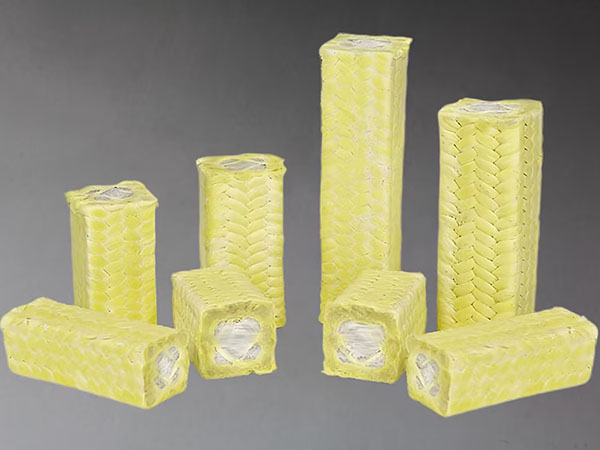
A product data sheet describes a specific grade under specific test conditions, not every packing made from that polymer. SUNPASS catalogue data illustrates the spread: a graphite fiber and carbon fiber corner braided packing is listed to 500 bar, −200 °C to +550 °C and pH 0–14, while an aramid fiber packing is also listed to 500 bar but only −50 °C to +260 °C and pH 2–12. PTFE filament packing is listed to 100 bar and −100 °C to +260 °C.
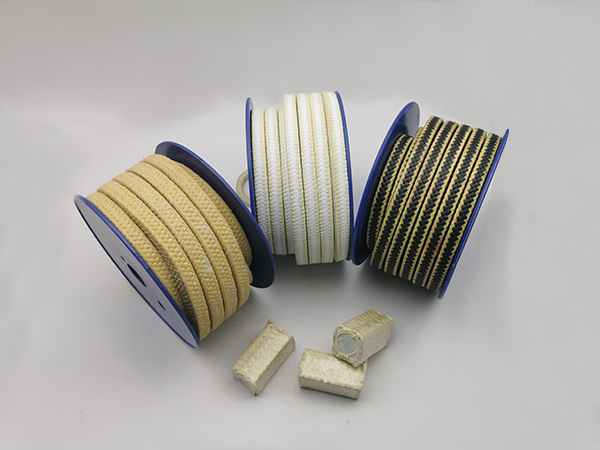
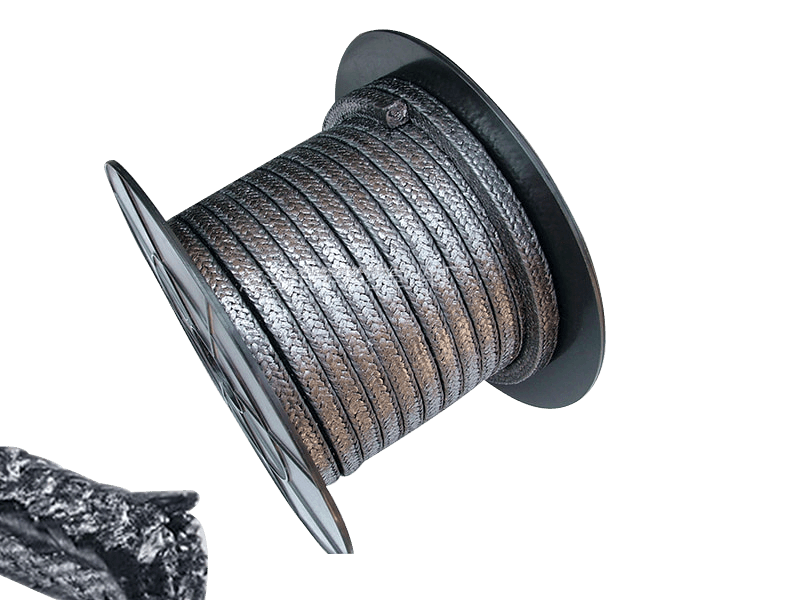
These ratings refer to specific products and test conditions, not simultaneous limits. Chemical exposure, oxidation, steam quality, time at temperature and braiding construction also matter.
3.5 Improper Installation and Gland Adjustment
Installation errors create extrusion paths even with the correct grade: wrong cross-section, angled ring cuts, aligned joints, uneven bolt tightening, and excessive or insufficient compression.
SUNPASS's installation guide specifies butt or 30–45° miter cuts, rings staggered by at least 90° and generally 120°, and each ring fully seated before the next is installed. It also calls for measuring stem diameter, box bore and depth before cutting rings.
Source: https://www.sunpass.cn/news/industry-news/installation-steps-of-gland-packing.html
Over-tightening is more commonly associated with friction, higher torque and accelerated wear; it is not a universal cause of extrusion, and clearance still needs checking. Poor installation changes the compression field; it does not simply “seat in.”
|
Failure Type |
Typical Signs |
Possible Factors |
|
Packing extrusion |
Material pushed into or through a clearance |
Gap, pressure, construction |
|
Packing leakage |
Fluid escapes around the valve stem |
Compression, surface condition, sealing contact |
|
Packing blowout |
Sudden loss of packing position or retention |
Pressure loading, retention failure, structural conditions |
|
Packing hardening |
Packing becomes less flexible |
Temperature, chemical exposure, ageing |
The four terms describe different mechanisms. Extrusion is displacement; blowout is sudden loss of retention; leakage is the resulting sealing failure; hardening is a material state change. Corrective action differs, so the terms should not be used interchangeably.
5.1 Packing Material Selection
|
Packing Type |
Selection Focus |
What to Verify Before Selection |
|
Graphite |
High-temperature valve service |
Oxidation, medium, pressure and product construction |
|
PTFE |
Chemical compatibility |
Creep, temperature and sustained compression |
|
Aramid reinforced |
Mechanical strength and abrasion |
Chemical compatibility and temperature limits |
|
Carbon fibre |
Mechanical and thermal requirements |
Grade, braiding structure and operating medium |
This is a preliminary framework, not a suitability guarantee; a graphite packing rated to 550 °C is not automatically suitable for an oxidizing medium at that temperature.
5.2 Reinforcement Structure
Metal wire reinforcement can improve the mechanical integrity of certain graphite constructions. SUNPASS lists an Inconel wire-jacketed mesh graphite packing for super-high-temperature applications. Effectiveness depends on wire arrangement, braiding, density, cross-section and gland load, and it does not eliminate extrusion caused by excessive clearance. Wire-reinforced rings are less compressible, so follow the manufacturer's torque guidance.
5.3 Packing Cross-Section and Stuffing Box Dimensions
Measure stem diameter, box bore and depth, then compare them with the packing section and the manufacturer's installation specification. A 12 mm packing in a 14 mm box leaves a void; a 14 mm packing in a 12 mm box cannot be installed correctly. Neither error is fixed by changing material.
5.4 Actual Operating Conditions
Record pressure and pressure variation, temperature, medium, valve type, operating frequency, and whether service is static or dynamic. These six inputs define the load spectrum; a packing chosen from a data sheet alone may meet the temperature rating while failing the cycling requirement.
|
Observed Condition |
What to Investigate First |
|
Packing extrudes near the valve stem |
Stem clearance, wear and alignment |
|
Packing extrudes near the gland follower |
Follower clearance and gland geometry |
|
Extrusion occurs after pressure changes |
Pressure history and packing retention |
|
Packing moves after maintenance |
Ring dimensions, installation and gland loading |
|
Repeated extrusion despite replacement |
Stuffing box geometry and valve condition |
This is a preliminary troubleshooting direction, not a diagnosis from the symptom alone.
|
Inspection Item |
What to Check |
|
Extrusion location |
Where the packing has moved or deformed |
|
Valve stem |
Surface damage, wear and alignment |
|
Stuffing box |
Dimensions and clearance |
|
Gland assembly |
Condition and even loading |
|
Existing packing |
Material, construction and dimensions |
|
Original installation specification |
Prior grade, section, ring count, and stem or box changes |
|
Operating history |
Pressure, temperature and cycles |
Compare the failed packing with the original installation specification to separate a design problem from a repair-induced condition. Follow the valve manufacturer's procedures, isolate, depressurise and verify safety before removing or adjusting packing; a gland loosened under pressure can cause a sudden release.
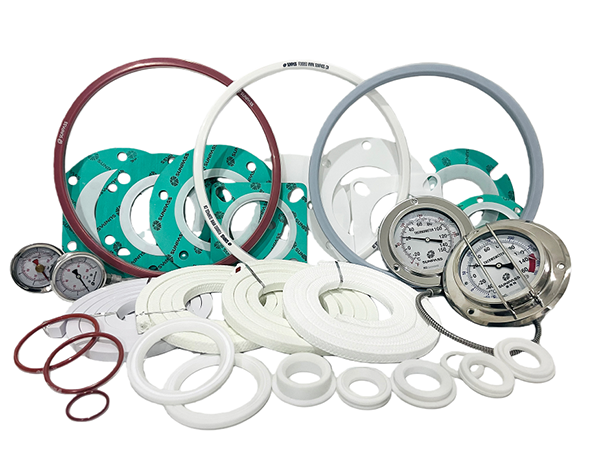
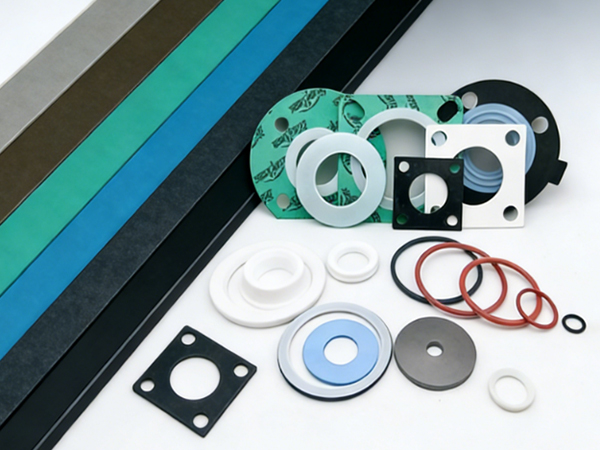
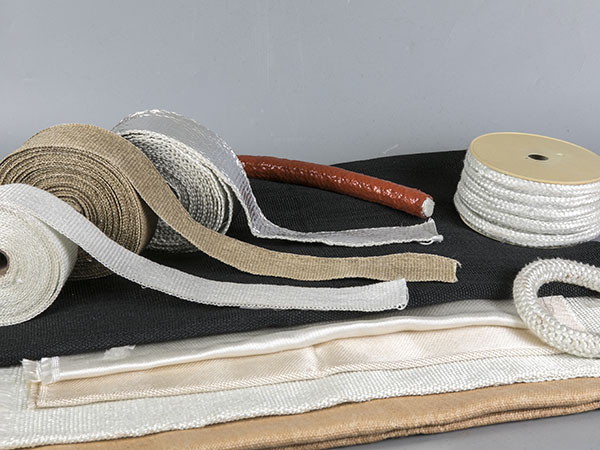
SUNPASS supplies graphite, PTFE, aramid and carbon-fibre gland packing, with reinforced constructions and custom dimensions subject to the current catalogue. It has focused on sealing solutions since 2000, building on Tenglong Sealing's manufacturing experience since 1979 — more than 25 and 45 years.
Source: https://www.sunpass.cn/about/
|
Customer Information |
What SUNPASS Can Help Confirm |
|
Valve type |
Packing application type |
|
Stem diameter |
Dimensional match |
|
Packing cross-section |
Packing specification |
|
Stuffing box dimensions |
Installation space and clearance review |
|
Medium and temperature |
Material suitability |
|
Operating pressure |
Construction and specification review |
|
Existing packing sample |
Existing construction identification |
Send SUNPASS your valve type, packing dimensions, medium, pressure and temperature, with photos or drawings of the stuffing box. Our team can review the construction and material options against your requirements.
No supplier can guarantee a packing change alone will solve every extrusion problem. If measured clearance exceeds the valve manufacturer's limit, the fix may be stem repair, box rework or a different retention design — not a harder packing.
What causes gland packing to blow out of a high-pressure valve?
Usually pressure load plus a retention path: excessive clearance, stem wear, uneven gland loading or an inadequate construction.
Is packing extrusion the same as packing leakage?
No. Extrusion is displacement into a gap; leakage is fluid escaping past the seal. One can cause the other.
Can excessive clearance cause valve packing extrusion?
Yes, but define the gap: stem-to-box, follower-to-stem and follower-to-box clearances differ. The valve manufacturer's specification governs.
Does graphite gland packing prevent blowout in high-pressure valves?
No. Performance depends on the specific grade, construction, clearance and operating conditions.
Can metal wire reinforced packing reduce extrusion risk?
It can improve mechanical integrity, but it does not correct an out-of-tolerance box or misaligned stem.
What information is needed to select gland packing for a high-pressure valve?
Valve type, stem diameter, packing section, box dimensions, medium, pressure and temperature.
All product and installation data are cited inline at the point of use. Material ratings describe specific products under specific test conditions and must be confirmed against the actual packing grade and valve specification. Product photographs reproduced from the SUNPASS website (www.sunpasssealing.com).
Sunpass Sealing Technology (Zhejiang) Co. LTD
• Zhejiang Top Sealing and Insulation Co.,Ltd.
• Echo Industry Limited
• Tenglong Sealing and Thermal Insulation Manufactory
 English
 русский
 Español
 Add: No. 78 West Road Zhenxing, Lianghui Industry Zone, Yuyao, Zhejiang, China
 Tel: +86 574 62837603
 E-mail: