+86 (0)574 62837603


When plant engineers try to figure out how much heat a sealing component can handle, they usually start by looking up material datasheets. But standard numbers don't tell the whole story. Flexible graphite sheet material behaves differently depending on whether oxygen is present in the system. Industrial grades typically start with a minimum carbon purity of 99.0% to ensure stable mechanical behavior under thermal stress. According to material characterization guidelines published by Minseal, standard flexible graphite foil maintains a baseline density ranging from 1.0 g/cm³ to 1.8 g/cm³, which directly dictates its physical performance across different industrial environments.
To get a clearer picture of how these sheets hold up over time, it helps to look at the physical structure of compressed expanded graphite. Commercial flexible graphite sheets usually range in thickness from 0.076 mm up to 3 mm. Within this range, bulk density plays a huge role in determining structural performance. For instance, standard industrial rolls often have a bulk density of approximately 70 lb/cu.ft (1.1 g/cc), giving them enough compressibility to flow into tiny flange surface irregularities. Tensile strength for these standard grades typically hovers around 650 psi (4.4 MPa), providing just enough mechanical backbone to prevent blowout during initial bolt torque application.
> "When you're designing a high-temperature flange joint, looking at the maximum rating on paper isn't enough. You have to evaluate how the graphite density interacts with bolt load retention, especially when thermal cycling kicks in."
> — Marcus Vance, Senior Gasket Design Consultant at Industrial Sealing Solutions
The biggest misconception in high-temperature piping design is assuming that carbon can handle extreme heat anywhere. When a graphite sheet is exposed to an oxidizing atmosphere like standard ambient air, thermal degradation begins much earlier than most operators expect. Research documented in thermogravimetric analysis of reactor graphites (IG-11 study, ORNL technical documentation) shows that noticeable weight loss and carbon oxidation initiate at approximately 400°C to 450°C. For continuous long-term service in air, technical guidelines from the Fluid Sealing Association (FSA Publication FSA-G-604) cap the standard operational limit at 510°C (950°F) to prevent gradual material thinning.
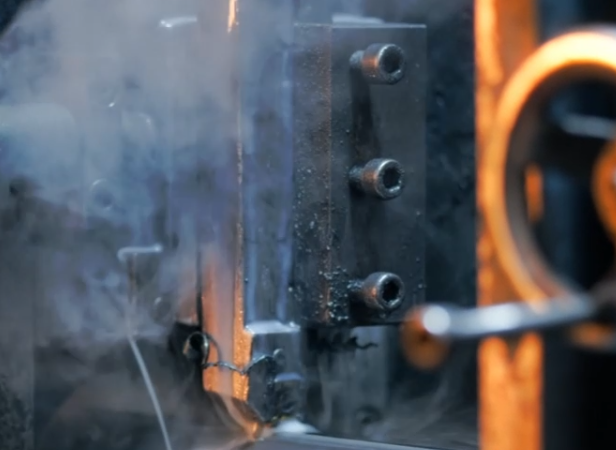
As the material sits in ambient air above 500°C, oxygen molecules begin reacting with the exposed edges of the carbon crystal lattice, converting solid carbon into carbon dioxide gas over time. Laboratory test results indicate that uninhibited flexible graphite exposed to a constant 600°C air stream will lose up to 15% of its total mass within 250 hours of continuous exposure. This gradual mass loss reduces the effective cross-sectional thickness of the sheet, leading to a drop in gasket seating stress and eventual fugitive emissions if bolt loads aren't periodically re-torqued.
> "People see a black gasket and assume it's indestructible at any temperature. But if you put an uninhibited graphite sheet out in open air above 500 degrees, you'll watch it slowly oxidize away over a few weeks. Always check if your application is sealed or venting to atmosphere."
> — Dr. Elena Vance, Materials Research Scientist in Industrial Sealing Technology
When oxygen is completely removed from the equation, the thermal capacity of a graphite sheet changes dramatically. In non-oxidizing environments—such as pure nitrogen, argon, or closed vacuum furnaces—flexible graphite can withstand extreme heat up to 3000°C (5400°F) without melting or losing its fundamental crystal lattice structure. Furthermore, empirical testing data compiled in the ASM Handbook: Volume 3 indicates that carbon sublimation does not occur until temperatures surpass roughly 3600°C under controlled inert pressures, making high-purity graphite an exceptional choice for high-temperature vacuum insulation layers and furnace components.
In these oxygen-free settings, thermal conductivity also behaves in a predictable, highly anisotropic manner. Parallel to the sheet surface, in-plane thermal conductivity reaches an impressive 140 W/(m·K) or higher, efficiently spreading heat across the surface, while through-thickness thermal conductivity remains much lower, typically around 5 W/(m·K). This directional thermal performance helps protect underlying equipment components from extreme localized heat spikes. Plant operators running vacuum heat-treating units note that graphite components can endure over 5,000 successive heating and cooling cycles between ambient temperature and 1200°C without exhibiting thermal shock cracking or structural delamination.
To combat atmospheric breakdown in border-line temperature applications, many high-end commercial sheets incorporate specialized chemical oxidation inhibitors. These passivating additives block active reaction sites on the carbon flakes, slowing down mass loss rates by roughly 50% to 60% in the 500°C to 650°C range. This added chemical defense allows industrial gaskets to survive short-term thermal excursions or intermittent flame exposure without experiencing catastrophic structural failure or premature blowout.
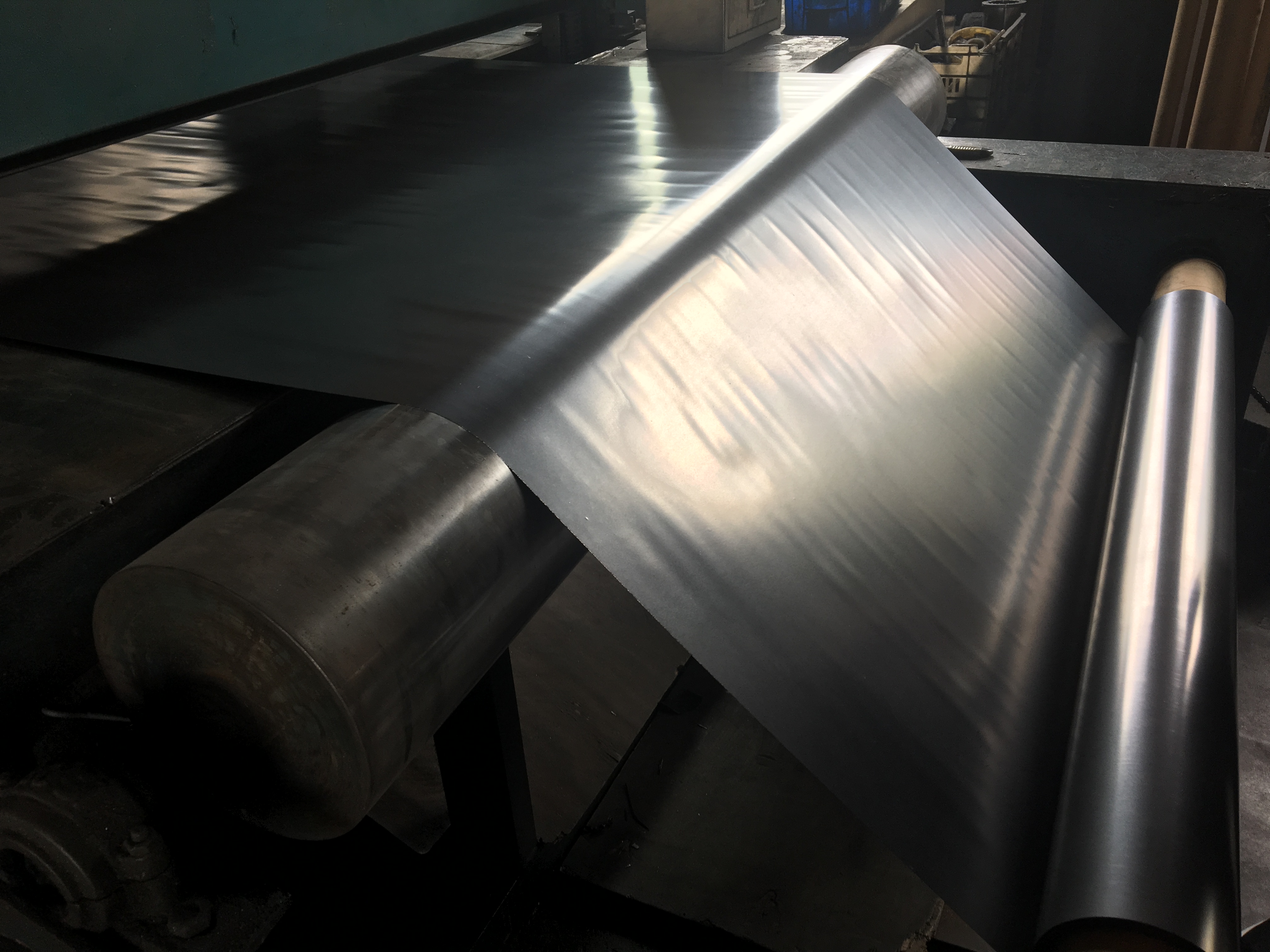
When evaluating sheet samples, technicians often inspect the inhibitor distribution content, which typically constitutes between 1% and 3% of the total dry weight. This minor compositional adjustment alters the activation energy required for oxygen chemisorption, effectively pushing the threshold for runaway oxidation upward by nearly 100°C. For plant operators managing aggressive cyclic exhausts or flare systems, specifying inhibited grades provides an extra layer of operational safety.
For critical‑use flexible graphite sheet sealing and thermal management projects, consistent material quality and robust manufacturing standards are decisive factors affecting component service life and overall plant operational availability. SUNPASS supplies high‑purity flexible graphite sheets as well as reinforced composite material options, purpose‑built to deliver dependable performance for a comprehensive range of industrial working scenarios.
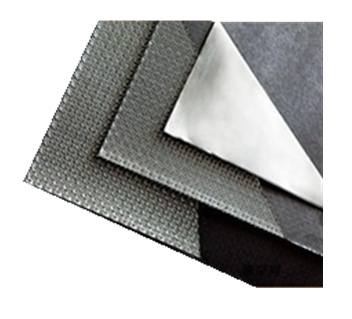
① Superior Raw‑Material Foundation We adopt high‑purity expandable crystalline graphite as our base feedstock. This yields excellent thermal stability, good oxidation tolerance, and wide‑ranging chemical compatibility for fluids spanning pH 0 to 14 (excluding strongly oxidizing acids). A broad selection of reinforcing substrates is on offer: SS316L, SS304, carbon steel and Nickel 600 are available for tanged, flat and mesh‑type insert cores. These enhancements greatly boost mechanical strength for high‑pressure working environments.
② Strict In‑house Manufacturing Governance All production workflows — starting from graphite expansion through to metal‑graphite composite lamination — are closely managed under our internal quality protocols. Three core‑bonding techniques cater to diverse application priorities: mechanically interlocked tanged inserts, thermally bonded flat inserts, and anti‑blowout mesh inserts. Lot‑by‑lot inspection procedures ensure consistent mechanical behaviour and homogeneous sealing capability across production batches.
③ Reliable Quality‑Control System Full‑lot traceability is implemented across SUNPASS product lines. Upon customer request, we furnish complete supporting paperwork such as raw‑material certification and standardized test reports. Our high‑purity graphite combined with metallic insert reinforcement reduces performance deterioration triggered by oxidation, enabling longer operating lifespans under severe process conditions.
④ Full‑cycle Technical & Logistics Assistance Our sealing‑application engineers deliver customized material‑recommendation services tailored to your real‑world working parameters: temperature, pressure, process media, and flange rating requirements. Common sizes and thickness specifications are kept in inventory to shorten delivery cycles. OEM services and custom‑developed variants are also accessible, including special metallic inserts and non‑standard dimensions to satisfy project‑specific requirements.
Minseal Technical Data. Flexible Graphite Foil in Rolls and Sheets: Working Temperature Range and Thermal Conductivity Specifications. Available online: [http://www.flexiblegraphite.net/graphitefoil.htm](http://www.flexiblegraphite.net/graphitefoil.htm)
Oak Ridge National Laboratory (ORNL). Practical Aspects for Characterizing Air Oxidation of Graphite and Thermogravimetric Analysis of Temperature Regimes. Available online: [https://impact.ornl.gov/en/publications/practical-aspects-for-characterizing-air-oxidation-of-graphite/](https://impact.ornl.gov/en/publications/practical-aspects-for-characterizing-air-oxidation-of-graphite/)
ASM International. ASM Handbook, Volume 3: Alloy Phase Diagrams and Carbon Materials Thermal Stability Limits. Available online: [https://www.asmih.org](https://www.asmih.org)
Sunpass Sealing Technology (Zhejiang) Co. LTD
• Zhejiang Top Sealing and Insulation Co.,Ltd.
• Echo Industry Limited
• Tenglong Sealing and Thermal Insulation Manufactory
 English
 русский
 Español
 Add: No. 78 West Road Zhenxing, Lianghui Industry Zone, Yuyao, Zhejiang, China
 Tel: +86 574 62837603
 E-mail: